Introduction to the Semantic Operator Engine
What if understanding complex systems was as simple as watching ducks in a pool?
The Real Work
I'm building the Semantic Operator Engine—a framework for controlled navigation through semantic space. Not just searching for information, but systematically transforming how AI systems move between concepts.
The technical work involves operator design, latent space mapping, and controlled semantic transformations. But explaining those concepts directly gets abstract quickly.
So: the Duck Pool.
Why Ducks in a Pool
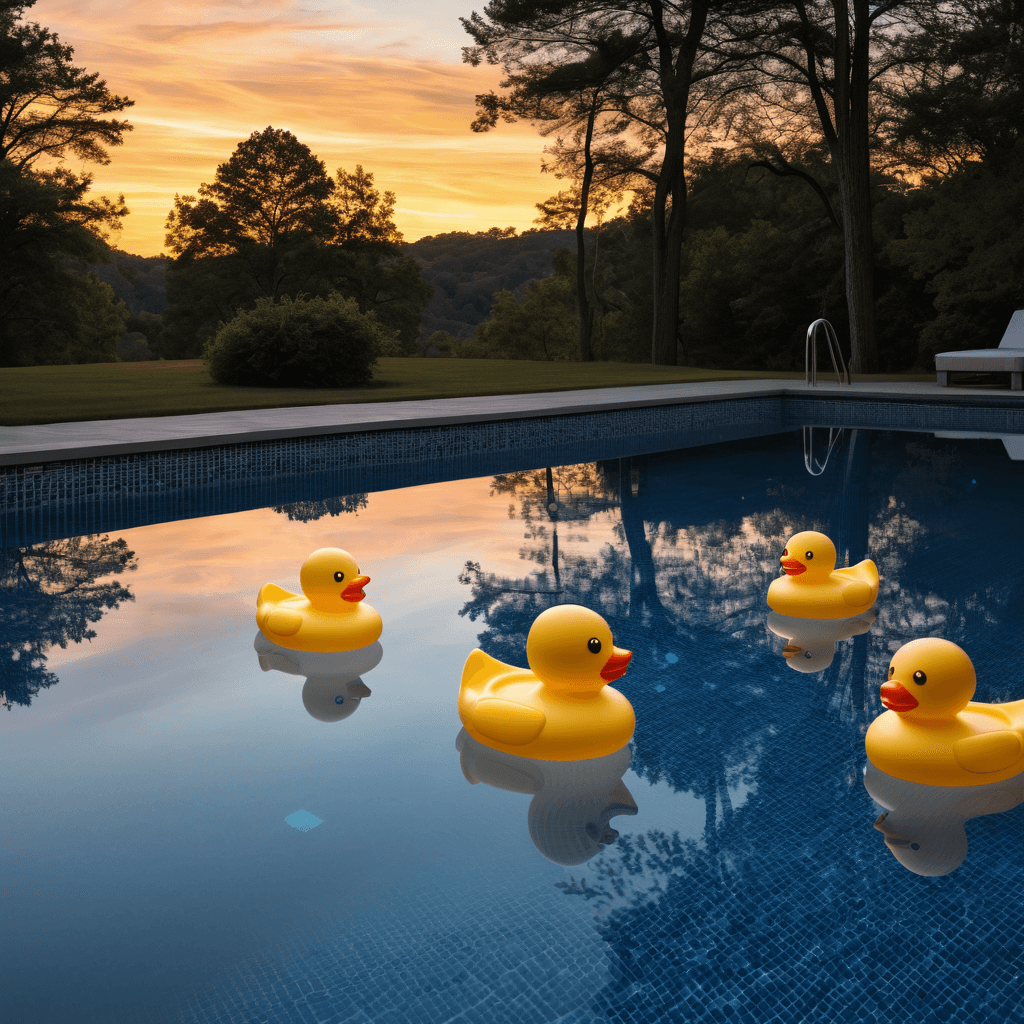
Imagine a swimming pool with rubber ducks floating on the surface. Each duck is a concept. The pool is semantic space. The distance between ducks represents how related the concepts are.
This isn't just a cute metaphor. It's a way to make the actual mechanics visible.
When you ask an AI system "What is machine learning?", the system doesn't retrieve a definition. It navigates to a region of semantic space where "machine learning" concepts cluster. It's pointing at a duck in the pool.
The Problems This Solves
Problem 1: Perspective You point at a duck from the north side. I'm standing on the east side. We're both looking at different ducks. (See: The Pointing Problem)
This is the communication challenge in semantic systems. Same query, different context, different results.
Problem 2: Clustering Some parts of the pool are packed with ducks. Other parts are nearly empty. (See: Crowded Corners)
Concepts cluster in semantic space. Understanding the density tells you about conceptual relationships.
Problem 3: Description vs. Coordinates I can tell you to get "the yellow duck near the ladder" or give you exact coordinates. One requires interpretation. One requires precision. (See: Describing Ducks)
This is the difference between natural language and vector embeddings.
Problem 4: Depth Every duck casts a shadow beneath it. The depth of the pool adds another dimension to navigation. (See: Shadows Beneath)
Semantic space isn't flat. There are layers of meaning beneath the surface concepts.
The Semantic Operator Engine
The engine I'm building addresses these problems through operators—transformations that move through semantic space in controlled, predictable ways.
Instead of: "Search for documents about X"
You can express: "Start at concept A, apply transformation B, navigate to the region where C-type concepts cluster, then return documents from that semantic neighborhood"
The Duck Pool experiments make these transformations concrete. Each post explores one aspect of how semantic navigation actually works—using ducks, pools, and spatial reasoning instead of mathematics.
What This Enables
Controlled semantic navigation allows:
- Precise retrieval: Get exactly the semantic region you want, not just keyword matches
- Transformation chains: Apply multiple operations to navigate complex conceptual paths
- Reproducible exploration: Same operators produce consistent semantic movement
- Contextual anchoring: Navigate from a known position rather than searching blindly
This isn't theoretical. I've built systems that use these principles for document analysis, RAG optimization, and semantic search at scale.
The Duck Pool as Translation Layer
The Duck Pool experiments serve a specific purpose: making abstract semantic operations concrete and accessible.
When I write about pointing at ducks, I'm explaining perspective transformation in semantic space. When I write about crowded corners, I'm explaining density clustering in latent embeddings. When I write about shadows beneath, I'm explaining dimensional depth in vector spaces.
The metaphor isn't decoration. It's a translation layer that makes the actual work visible.
What's Next
The Duck Pool Experiments will continue exploring specific mechanics: - How perspective changes semantic retrieval - How clustering reveals conceptual relationships - How description methods affect precision - How depth adds dimensionality to navigation
Behind each experiment is real engineering work on the Semantic Operator Engine.
The ducks make it accessible. The engine makes it work.
Part of the Duck Pond Experiments series - making abstract concepts concrete.