Shadows Beneath
Every duck you see floating has a shadow beneath it.
Looking Down
The pond is clear enough that when you look down, you can see the bottom. It's only a meter deep, maybe two in the center. The water is clean, slightly green-tinted, but transparent.
You're looking at the ducks on the surface. They paddle, they drift, they float in their various positions across the pond.
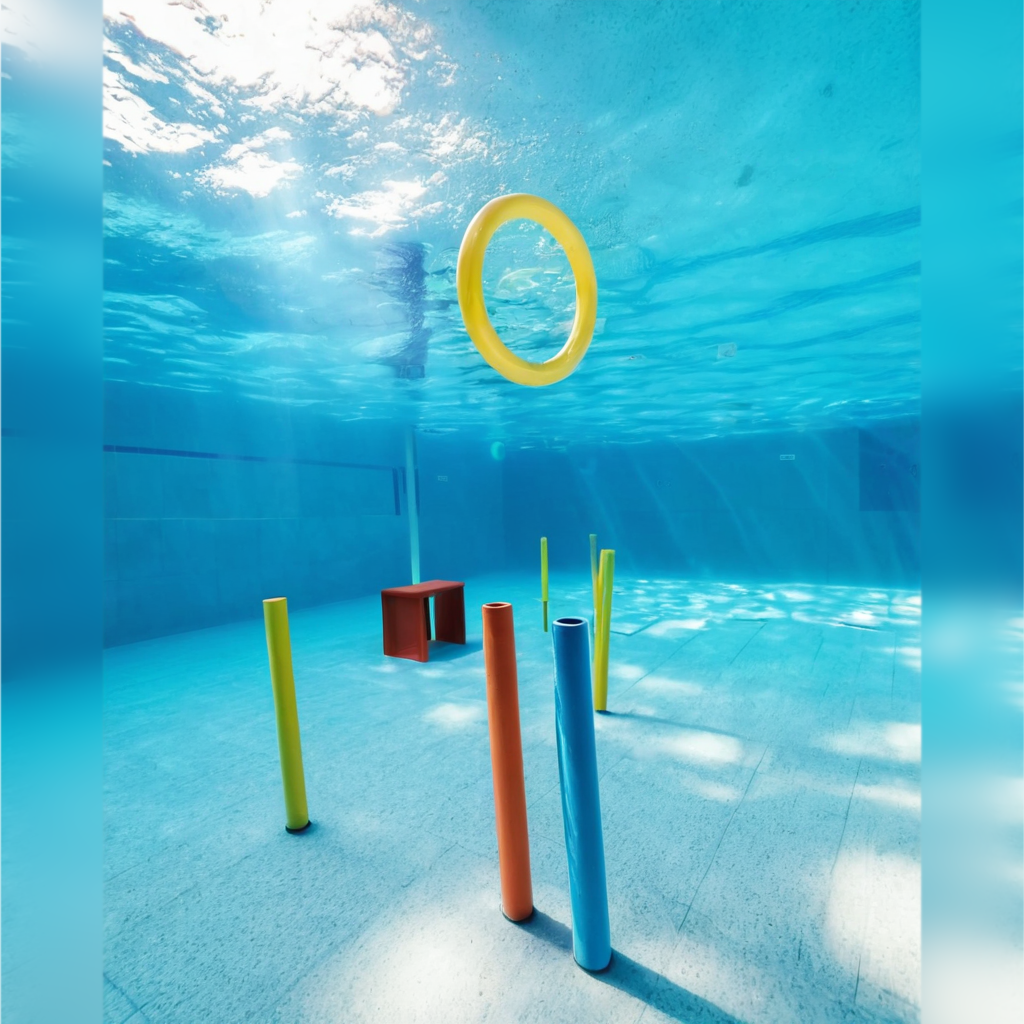
And beneath each duck, on the pond bottom, lies a slinky.
The Connection
The duck on top is here, now, in the present. Floating, visible, easy to point at.
The slinky on the bottom is the same duck - but from before. A different state, a different time, a different representation. It's not the duck as it is now. It's the duck as it was, compressed down, settled at the bottom, changed in form but still connected.
Look at a duck. Now look straight down through the water. There's the slinky, directly beneath it, same X-Y coordinates, different Z level.
The Same Position, Different Layers
If you're pointing at a duck from the side of the pond, you're pointing at a position: so many meters from this edge, so many meters from that edge.
That position has multiple layers: - Top layer: The duck, floating now, current state - Bottom layer: The slinky, settled, past state
Same horizontal position. Different vertical position. Connected through depth.
Why Slinkies?
The duck is alive, active, moving. The slinky is compressed, coiled, settled. It's not the same form anymore - it's been transformed, condensed, changed by time and gravity.
But it's still the same entity. The slinky was the duck. Or the duck was the slinky. They occupy the same semantic space horizontally, but they represent different states vertically.
A young duck and an old duck. A concept now and that concept in the past. A word today and its etymology centuries ago.
Same meaning-space. Different time-layer.
Looking Through Layers
When you look at the pond from above, you might just see the ducks. Surface level. Present state.
But if the water is clear enough, if you look carefully, you see the slinkies beneath them. The past states. The compressed histories. The transformed representations.
They're not obvious. You have to look through the surface to see them. But they're there, aligned beneath, connected through depth.
The Duck Moves, The Slinky Stays
Watch a duck paddle across the pond. It moves from the western edge toward the eastern edge, changing position, drifting with current and intention.
The slinky on the bottom? It stays where it is. It marks where the duck was, not where it is now.
As the duck moves, it leaves a trail of past positions. In this pond, those past positions are marked by slinkies, settled at the bottom, showing the history of movement.
Present state floats. Past state settles.
What This Means
When you point at a duck, you're pointing at a position that has depth.
On the surface, there's the current representation - the active, present form.
Beneath, there's the historical representation - the past, the origin, the compressed version.
You can focus on the duck and ignore the slinky. Most of the time, you do. The present is what matters for most communication.
But sometimes, understanding the slinky helps you understand the duck. Where it came from. How it got here. Why it's shaped the way it is now.
Young and Old
Imagine a duckling - small, fluffy, paddling awkwardly. Beneath it, on the pond bottom, a tiny coiled spring. The slinky is small too, proportional.
That duckling grows. Weeks pass. It becomes a full duck - larger, more capable, different in form.
The slinky beneath grows too. Not in size - slinkies don't grow - but in the way it's coiled, compressed, representing more history, more time, more transformation.
The young duckling is still there, compressed in the slinky at the bottom. The old duck on top is the present manifestation.
Same entity. Different layers of time.
The Translation Between Layers
You can't grab the slinky from the bottom and expect it to float like a duck. It's not in the right form. It's compressed, metallic, weighted down.
But you can observe the slinky to understand the duck. Where it came from. What shape it held before. How much it's changed.
And if you understand the relationship between ducks and slinkies - between present states and past states - you can predict patterns. How ducks move. How slinkies accumulate. How time transforms one into the other.
Why This Matters
Concepts have history. Words have etymology. Ideas have evolution.
The duck you see floating is the current meaning, the present usage, the active state.
The slinky beneath is the origin, the past meaning, the compressed history.
They're connected. Same position in semantic space horizontally. Different position vertically through time.
When you point at a duck, you're pointing at a position that extends through depth. Most of the time, you're talking about the surface - the present, the obvious, the floating representation.
But sometimes, you need to look down through the water and acknowledge: there's a slinky down there. And it matters.
The Takeaway
Every duck has a shadow beneath it. Same position, different layer.
The pond isn't just a flat surface. It has depth. Current state floats. Past state settles.
When you point at a duck, remember: you're pointing at a vertical line through time, not just a horizontal position in space.
The slinky is down there. Connected. Transformed. But still part of the same entity.
Part of the Duck Pond Experiments series - making abstract concepts concrete.